
As I continue my recovery from a major surgery, I have been thinking about how important and precious the inverted poses are in my yoga practice. In Iyengar Yoga, inversions are emphasized because of their profound physiological effects, and their benefits to our mental and emotional state. Sirsasana (Head Balance)and Sarvangasana (Shoulder Balance) are considered the cornerstones poses of our practice, king and queen of all the asanas.
Knowing the importance of the “topsy turvy” poses from my studies, it was frustrating that my own experience of these poses was full of difficulty. I had trouble holding the poses. I had frequent neck and shoulder injuries. I did not feel particularly good during or after these poses that were supposed to be like medicine. Although I did not enjoy the inversions, I did keep practicing them, even if only for a few minutes.
I learned that much of my difficulty stemmed from the stiffness of my shoulders and upper back, so I worked on all the Hast Mudra (Arm Actions) and Purva Pratana Sthiti (Backward Extensions) that would give me the needed mobility and strength to do the inversions with good alignment and correct actions.
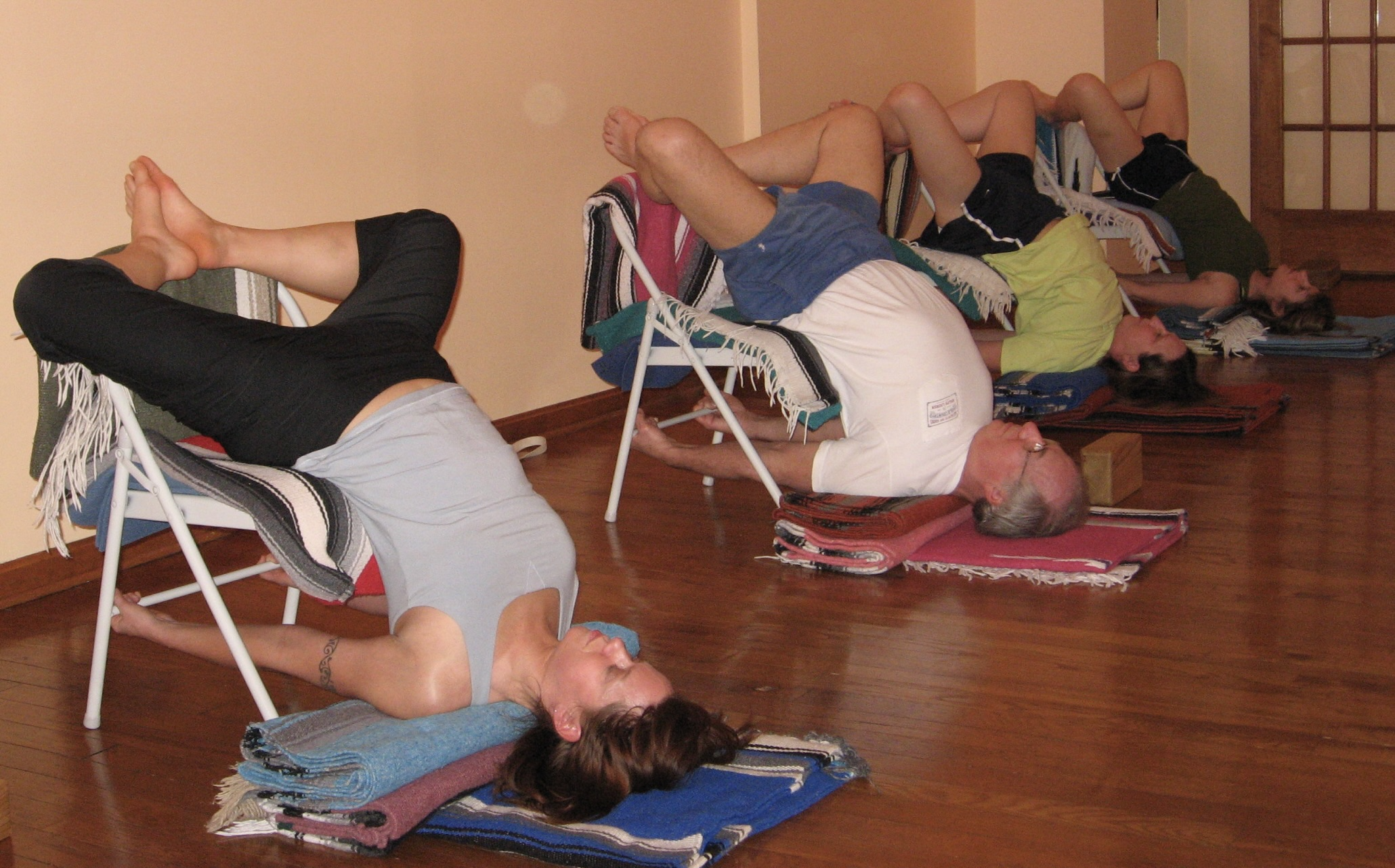
While I never became a practitioner who could hold long inversions with ease, these poses improved gradually over time, and I grew to appreciate how they make me feel. As I rebuild my yoga practice post-surgery, it is a real joy to be able to do those poses again. I have a fresh appreciation for their place in my practice and how they make me feel.
I started with Adho Mukha Svanasana (Downward Facing Dog Pose) which is a semi-inversion, and also prepares the arms and shoulders for other inversions like Adho Mukha Vrksasana (Hand Stand), Pinca Mayurasana (Forearm Stand) and Sirsasana (Head Balance). Once my dog pose became stable, I knew I was ready to try a handstand. After another week or so, it was time to go further.
My first Sirsasana was short but sweet! I did not realize how much I had missed this wonderful pose. I was then able to do Sarvangasana with the support of the chair. Afterwards, I felt joyful and calm. I realized how the inversions help improve my mood and reduce anxiety. It is one thing to read about these effects in a book, and quite another to experience them directly.
Now that I can again do all the classic inversions, I am striving to build up my timing, so as to receive the deeper benefits that come from longer holds in the poses. Some of those benefits include improved circulation, hormonal balance, improved digestion, toning and soothing the nervous system, mental clarity, and emotional tranquility. (For more details about the powerful effects of inversions, I refer you to Light on Yoga by BKS Iyengar and Yoga: A Gem for Women by Geeta Iyenger.) To give you a taste, here is a wonderful quote from Yoga in Action: A Preliminary Course by Geeta Iyengar:
“These asanas work on the respiratory, circulatory, nervous and glandular systems. They change the very personality and the mental attitude of a person for the better, so that one’s mind gravitates towards purity. These asanas help one to strengthen will power, improve memory, increase intellectual capacity and bring emotional stability, provided they are regularly practiced.”
I am so happy to be able to do these poses again! It has inspired me to even further encourage and persuade my students to practice them regularly. If the classic versions can’t be done, or have not been learned yet, there are many options. Some versions of Sirsasana can be done on two chairs, on stacked blocks, on a “headstander” prop or on yoga ropes. Sarvangasana can be done with the support of a chair. Almost all practitioners can do Viparita Karani (Reversed Practice), in which the pelvis is supported on a bolster and the straight legs rest up the wall.
Of course there are times when the inversions should not be done. Students should avoid practicing inversions if they have high blood pressure, problems of the eyes or ears, heart disease, dizziness or nausea, or during menses.
Otherwise, inversions should be done daily. Students should be sure to get good instruction from a qualified teacher to help build up a proper foundation for the inversions. Then a practitioner can experience the healing properties of these wonderful poses for themselves.
I was thinking of the phrase made famous by the author Michael Pollan. To encourage healthy eating, he wrote that we should:
“Eat food. Not too much. Mostly plants.”
So my new catch phrase for my students (and myself!) is
“Do inversions. Most days. Some amount of time.”
Namaste,
Karen
To study Iyengar Yoga with (and inversions!) with Karen and the other Certified Iyengar Yoga Teachers at Green Tara Yoga, visit our web site at www.greentarayoga.com
Inversions are us. OOOMMMM